OSHA and Your Rights as a Truck Driver
By: Allen Smith
Trucking companies retaliation against truck drivers
According to Federal Law, employers are prohibited from firing, demoting, or in any other way discriminating against an employee. Supposedly, this law applies to trucking companies as well. Truck drivers who refuse to violate HOS rules or to operate the CMV in a way that would violate a Federal Commercial Motor Vehicle Regulation are protected from any kind of retaliation by the trucking company, under the STAA, 49 U.S.C. Section 31105, and are encouraged to report any such retaliation to the FMCSA or to OSHA.
The Surface Transportation Assistance Act (STAA) is suppose to provide a simplified and effective remedy for truck drivers who are fired for insisting on following Federal Motor Carrier safety regulations as set forth by the FMCSA. If a trucking company takes action against a driver for any complaint where the driver is protected from retaliation, then he or she may file a complaint with the Occupational Safety and Health Administration (OSHA) that could result in reinstatement, back pay and benefits, attorney fees and costs, and other remedies.
Truck drivers and their OSHA rights
The OSH Act protects workers who report to their employer, OSHA or other government agencies about unsafe or unhealthful working conditions in the workplace or environmental problems. The STAA prevents trucking companies from invoking retaliatory measures against a driver who invokes his or her rights under OSHA. The FMCSA also encourages truck drivers to report safety violations by motor carriers.
Some examples of activities protected under the Surface Transportation Assistance Act are:
- Making a complaint to the U. S. DOT about violations, or possible violations, of commercial vehicle safety regulations.
- Making a complaint to your employer about violations, or possible violations, of commercial vehicle safety regulations.
- Refusing to drive a commercial vehicle when impaired due to illness or fatigue.
- Refusing to drive a vehicle that exceeds highway weight restrictions.
- Refusing to violate hours-of-service regulations.
- Refusing to drive a vehicle with defective lamps, leaky exhaust systems, inadequate brake pressure or adjustment.
- Refusing to violate speed limits.
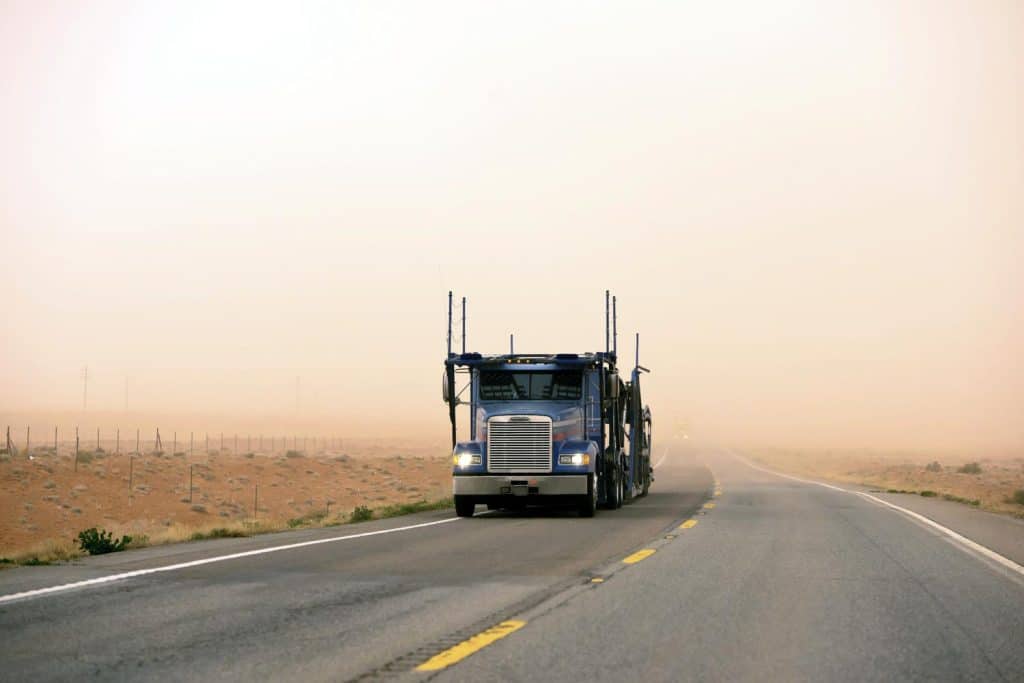
- Refusing to drive in hazardous weather.
- Refusing to falsify a log book.
Trucking companies are prohibited from retaliation or discrimination measures toward the truck driver who exercises their OSHA rights. Discrimination can include the following actions:
- Firing or laying off
- Assigning to undesirable shifts
- Blacklisting
- Demoting
- Denying overtime or promotion
- Disciplining
- Denial of benefits
- Failure to hire or rehire
- Intimidation
- Transferring
- Reassigning work
- Reducing pay or hours
Most STAA cases involve drivers refusing to drive when fatigued or the load is considered unsafe. Trucking companies who retaliate by reducing the miles the driver receives, is thus reducing the pay for the trucker, thus violating the STAA. You can submit your questions to OSHA if you feel that you have been retaliated or discriminated against by the trucking company.
Is OSHA working for truck drivers?
One study found that OSHA ruled in favor of the truck driver only 31% of the time. In most of these cases, however, the employee chose to act without an attorney experienced in employment law. The study also noted that many of the cases that OSHA dismissed were successful when appealed. The Workplace Fairness Organization provides a source to locate an attorney who specializes in employment law.
But is OSHA, the STAA and the FMCSA working for truck drivers? Many truckers report that when contacting OSHA or the FMCSA on such matters, their complaints went unnoticed. Furthermore, drivers state that they might as well had been “talking to a fence post” due to no action taken by OSHA or the Federal Motor Carrier Safety Administration.
The Act also is suppose to provide compensation for the truck driver who’s claim is successful in various forms as:
- reinstatement
- back pay
- front pay
- compensatory damages for such items as emotional distress and loss of reputation,
- interest on damages
- attorney fees and costs
Other remedies, known as “equitable remedies” include:
- purging of adverse information from personnel records, and
- posting of information about the case at the employer’s work sites.
Trucking companies beat OSHA and FMCSA at their own game
When it comes to enforcing the STAA and FMCSA protection in place for truck drivers and their employee rights, trucking companies have proven to be much smarter than these two agencies. By creating the “Starving Out” process of truck drivers and placing the blame on economic issues and the lack of freight, it can often lead to the trucker unable to prove that they were actually retaliated against. Even though both OSHA and FMCSA have acknowledged that this process of starving out drivers is in place within the trucking industry, there have been no parts created in the FMCSA regulations to hold motor carriers responsible.
Will CSA 2010 prevent truck driver retaliation?
Although CSA 2010 is expected to hold motor carriers more responsible for safety issues, the standard mileage for professional truck drivers have been set at 2500 miles per week. If a driver uses their right under OSHA and the FMCSA, trucking companies will still be able to retaliate against the driver by utilizing the starving out process. Federal regulations should include a sub-part stating that a motor carrier must supply the truck driver with the weekly miles that were promised at the time of hire.
Trucking companies will always tell the driver that the average miles per week that they can expect is 2500 miles. A Federal Law should be enacted to hold the company accountable for this claim. This could play an effective part in stopping the “starving out” process which is most often used as a retaliation tool against truck drivers.
If OSHA and the FMCSA is truly for the employee rights of the trucker, a regulation such as this should be in place.
© 2010, AskTheTrucker. All rights reserved.
Related posts
Tagged with: employee rights • FMCSA • osha • retaliation • staa • Surface Transportation Assistance Act • truck drivers • trucking companies
Filed under: Politics • Safety • otr trucking • trucking • trucking companies • trucking life
Like this post? Subscribe to my RSS feed and get loads more!


[...] This post was mentioned on Twitter by Allen Smith. Allen Smith said: OSHA and Your Rights as a Truck Driver: By: Allen Smith Trucking companies retaliation against truck driv… http://tinyurl.com/3xjpl4k [...]
[...] more: Truck driver employee rights under OSHA and FMCSA | AskTheTrucker Share and [...]
can a another driver mess with other drivers logs
Absolutely not. According to Part §395.8 (f)(2) of the Regulations:
Entries made by driver only. All entries relating to driver’s duty status must be legible and in the driver’s own handwriting.
Allen
[...] even disputes that arise from trucking companies lease purchase programs. Per our previous post, OSHA and your rights as a truck driver, many truck drivers fail their case due to not having the proper legal [...]
If a driver is being “starved out,” wouldn’t he or she be able to provide some evidence from other drivers in the same company, hence showing that not all driver’s mileage is decreasing? It seems like that would be enough to show that one driver is being single out and that the economic downturn is just an excuse.
Just a thought and question that I had.
The problem faced is that most drivers will not want “to get involved” because then their jobs would be on the line.
my question is how, as a local driver(Full log not required)fight getting fired for refusing to work over legal limits. the company is to keep track of time. the employer can change things in that department to falsify my actual time. Also when exactly are you considered to be operating a comercial vehical. This is always a dispute at my place of work.
To fight it, you will have to have proof/evidence to back up your claim, such as your actual documents that you turned in, and the documents that the company is showing or written/verbal collaboration from fellow employees, etc.
A commercial vehicle is any type of vehicle used for commercial / business purposes.
I work for a small regional carrier..The trip that I am not expected to falsify my log is rare..I am one of two females at this company. The other one runs well, but is also married to another driver that has been at the company for about 20yrs. When you refuse to do something due to your log, you are deadheaded home, in some cases given a week off. They want everything put into the satellite, and say that DOT never checked that before when they have gone through an audit, so you are also punished if you don’t put everything into it. I am at my wits end here. I constantly bump heads with dispatch.
My boss actually hunkered down beside my car as I was pulling out a couple weeks ago and said “you know you have a long way to go to get back into those guys good graces.” What I heard was “These guys are shafting you, I know they are shafting you, I condone that they are shafting you and until you start kissing their butts and doing what they say, it will continue..” I have just recently started journalising it, but have noted it over the years in my online blogs..It is to the point where other drivers (males) have come to me and asked me am I aware that I am being screwed..Which tells me that it must be on a bigger scale than even I imagine. Any suggestions that you can offer would be greatly appreciated. I stay here, cause the area I live in does not offer too many jobs that are not OTR, but it has gotten to the point that they keep me so stressed out and exhausted, that I am making stupid mistakes.
I work for a small trucking company in Michigan. For the past few weeks I have been butting heads with the owner of this trucking company about th H.O.S. and the 14 hour ruling. But, my question is more in the area of in the definition conflicts.
I’m paid mileage (and not a very good mileage at that) but the owner has me down as a subcontractor and I’m forced to pay my workmans comp even though I’m driving his truck and pulling his equipment.
Explain this to me if you could.
Thanks